

First Aid for the Snakes of South Australia

Several venomous snake species can be found in residential areas throughout South Australia.
Residential areas might seem like an unlikely sanctuary for snakes - however, they provide shelter, water, and a surplus of food in the form of rats and mice.
And while snakes will never go out of their way to attack you, their venom can cause dangerous symptoms ranging from bleeding and nausea to irregular heart beat and death.
In this article, we will describe the characteristics and distribution of three of the most dangerous snakes common to South Australia.
We also cover snake bites in our general and childcare first aid courses. We have training locations throughout South Australia, including Adelaide, and in every other state, capital city, and major town in Australia.

The Common death adder (Acanthophis antarcticus) has the following characteristics:
They generally shelter beneath leaf litter in forests, woodlands, and heaths in southern South Australia.

The Eastern brown snake (Pseudonaja textilis) has the following characteristics:
They generally shelter in or under animal burrows, fallen logs, and man-made debris in a wide range of habitats, save for rainforest and alpine regions. In fact, they are the most common snake found in South Australia and are regularly encountered in Adelaidean suburbs.

The Pygmy copperhead snake (Austrelaps labialis) has the following characteristics:
They typically shelter under flat stones, fallen timber, and in matted vegetation in the high altitude forests of the Mount Lofty Ranges, and in a wide variety of habitats on Kangaroo Island.
As it can be difficult to positively identify different snake species, all snake bites should be treated as a medical emergency.
If you are bitten by a snake, call Triple Zero (000) for an ambulance and apply the Pressure Immobilisation Technique.
It is important to remember, snake bites rarely result in fatalities due to the effectiveness of modern day anti venoms.
Likewise, snakes will never go out of their way to attack you - they will generally only bite people when they feel threatened or provoked. As such, if you encounter a snake, do not attempt to approach, capture, or kill it. If you need a snake relocated from your home, contact a snake catcher instead.
To learn more about identifying and treating snake bites, check out our Resource Library.
We also cover snake bites in our general and childcare first aid courses. We have training locations throughout South Australia, including Adelaide, and in every other state, capital city, and major town in Australia.
Head to our Locations page to enrol in a course near you today!
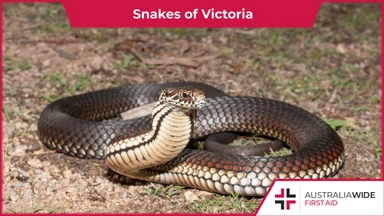
January 7, 2023
Recent flooding in Victoria has displaced several venomous snake species and forced them into homes, playgrounds, and workplaces. It is important to be familiar with the characteristics and preferred habitats of these snakes, as their bites can cause a host of deadly symptoms.
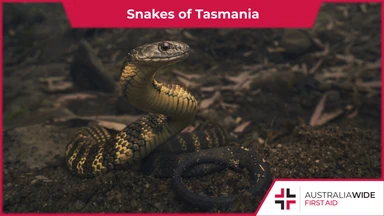
January 6, 2023
Tasmania is home to three species of snake: the Tiger snake, the Lowland copperhead snake, and the White lipped snake. These three snake species are all cold adapted and have highly neurotoxic venom.
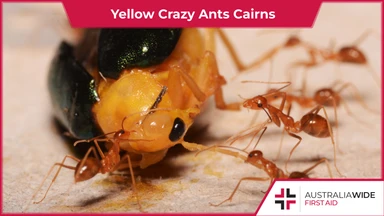
January 4, 2023
Cairns is currently dealing with several infestations of Yellow crazy ants. Yellow crazy ants are one of the world's worst invasive species, as they swarm aggressively and spray formic acid as a defence and attack mechanism.