

Fact Sheet on Venomous Snakes in Melbourne

There is a common misconception that the colder weather in Melbourne means there is less chance of encountering a snake.
This could not be more incorrect with some of Melbourne’s most common snake species being some of the deadliest in the world.
For this reason, it is important that you become familiar with some of the common snakes you will find in Melbourne suburbs and how to treat their bites. Continue reading for more information on common snakes in Melbourne.
Sign up for one of our general or childcare first aid courses in Melbourne for hands-on experience treating snake bites.

According to the University of Melbourne, the Melbourne Tiger Snake is the most common snake species found in Melbourne.
Named after their tiger-like stripes, Tiger Snakes are thick-bodied snakes with grey-brown to black colouring and can grow up to 1.5 metres in length. They can typically be identified by a series of brown to yellow-brown bands down their body however, these are not always present.
Tiger Snakes are ground-dwelling snakes that are often found around creeks, rivers, and swamps. Around the home, they will seek shelter in long grass and amongst piles of wood and rubbish.
Tiger Snakes are one of the most venomous snakes in the world. Although these snakes typically avoid people, they can attack if surprised or they feel threatened. When threatened, a Tiger Snake will raise itself off the ground and flatten their neck and head. For more information about the Tiger Snake, visit our Tiger Snake article.

The Lowland Copperhead has a blackish to grey-brown coloured body with a cream to grey coloured belly. Their name comes from the coppery-brown colouration of the head and snout. This species of snake can grow up to 1.45 metres in length.
Lowland Copperhead Snakes will typically seek habitats near water such as around creeks, streams, rivers, and lakes. There is a higher chance of a Lowland Copperhead living around your home if there is a swimming pool or pond on the property.
When initially threatened, Copperheads will flatten their body and thrash or flick about but will often not bite. Only with further provocation will they bite, which will inject a neurotoxic venom into the person that can be fatal without medical assistance.

The infamous Red Bellied Black Snake can easily be identified by its shiny black body and bright red to orange coloured belly. Red Bellied Black snakes are a medium-sized snake that grow to an average of 1.5-2 metres in length.
Red Bellied Black Snakes typically live around bodies of water, such as rivers, creeks, swamps, and wet forests. As they regulate their body temperature through sunlight, you may spot them on rocks or underneath timber and rock piles.
Although the Red Bellied Black Snake has a venomous bite, there are no recorded deaths in Australia as a result of this. This species is not typically aggressive and will usually retreat before attacking. If further provoked, it will raise its body from the ground and perform several strikes to bite.

Responsible for over 60% of snake bite deaths in Australia, the Eastern Brown Snake is known internationally as a dangerous snake in Australia.
This snake can be identified by its slender, brown body that ranges in colour from near black to light tan. Eastern Brown Snakes will typically grow to 1.5 metres but have been known to get as long as 2 metres.
Eastern Brown Snakes can be found in a wide range of environments but seem to prefer open landscapes such as woodlands and scrublands. This species of snake is known to seek shelter in suburbs around main cities, hiding amongst logs, large rocks, and piles of sheet metal or building materials.
If approached from a distance, the Eastern Brown Snake prefers to avoid detection by fleeing or remaining stationary. However, they will not hesitate to bite if they are surprised or cornered and have a venomous bite that can be fatal without medical assistance. For more information on the Eastern Brown Snake, see our Eastern Brown Snake Facts article.
We run certified CPR and First Aid courses throughout all major Australian cities. Find a location near you.

If you have identified someone has been bitten by a snake, you should immediately follow DRSABCD whilst keeping the person calm and providing reassurance.
The main treatment for all snake bites is the Pressure Immobilisation Technique (PIT). Tightly apply a wide heavy elastic bandage over the bite site. A second bandage should then be applied up the whole limb, starting at the fingers or toes.
Once the bandages have been applied, apply a splint to immobilise the limb and joints until emergency services arrive. For more information on first aid for snake bites, visit our article on First Aid for Snakes in Victoria.
Melbourne is home to a diverse range of snake species, with many of the common species being venomous.
Residents need to be aware of the types of snakes that can be found in the area and to take appropriate precautions when encountering them. This includes staying calm, keeping a safe distance, and seeking professional help from a snake catcher if necessary.
While snakes can be intimidating, they play an important role in maintaining the local ecosystem and should be treated with respect and caution. By understanding and respecting these creatures, we can coexist with them safely.
For more information on identifying and treating snake bites, sign up to attend one of our first aid courses at our Melbourne location.
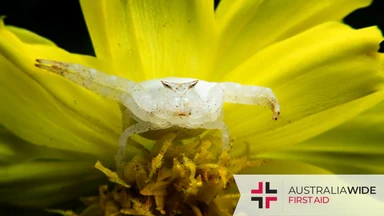
April 11, 2023
Renowned for its visually striking features, the Australian crab spider can be found in a variety of habitats, including urban areas. They have been known to bite when threatened, and their venom can cause pain, redness, and even dizziness.
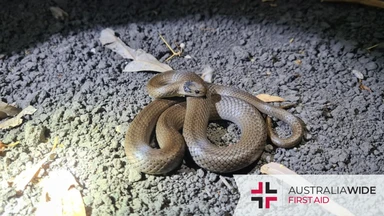
April 10, 2023
The Grey snake is a venomous member of the Elapidae snake family. They are known to inhabit woodlands and eucalypt forests in Queensland and New South Wales. Their venom contains procoagulants that can cause significant pain and swelling.
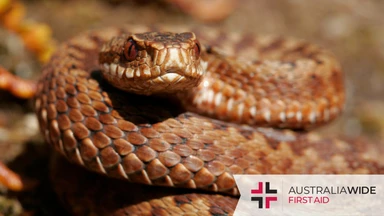
April 7, 2023
Darwin and the wider Top End region of the Northern Territory is home to over 40 native snake species. It this article, we help you decrease your risk of a snake bite by uncovering the main identifying characteristics of seven of Darwin's most common snake species.