

The Grey House Spider Explained

Endemic to eastern Australia, the Grey house spider (Badumna longinqua) can live in a variety of environments ranging from grasslands to riverside forests.
However, as their name suggests, they prefer to build webs in and around houses.
These tiny arachnids can also pack a mean bite resulting in localised pain and swelling.
Continue reading for more information on the Grey house spider, where you are likely to encounter them, and what to expect if you are bitten by one.
We also cover spider bites in our general and childcare first aid courses. We have training locations in every state, capital city, and major town throughout Australia.
Head to our website to find and enrol in a training location near you today.
The Grey house spider has the following characteristics:
The Grey house spider is indigenous to eastern Australia, though it is also found throughout New Zealand.
They are known to build their thin, ladder-like webs in isolated places in and around houses, including:
They use their webs to catch, envenomate, and eat a variety of prey, including moths, houseflies, and cicadas.
Like most spiders, the Grey house spider only bites when startled or provoked.
Their bites generally only cause moderate to severe local pain and swelling.
If you are responding to a bite from a Grey house spider:
Some people can also develop anaphylaxis as the result of a spider bite. If this happens, call Triple Zero (000) for an ambulance, consult the Australian Resuscitation Council's anaphylaxis treatment guideline, follow DRSABCD, and be prepared to perform CPR.
The Grey house spider is a common house guest in eastern Australia.
Though they are venomous, their bites are rare and generally only cause localised pain and swelling.
If you do sustain a bite from a Grey house spider, apply a cold compress to the affected area and watch for signs of deterioration or anaphylaxis.
For more tips on how to treat bites from some of Australia's deadliest spiders, book one of our general or childcare first aid courses.
We have training locations in every state, capital city, and major town throughout Australia. Head to our website to find and enrol in a first aid course near you today.
January 17, 2023
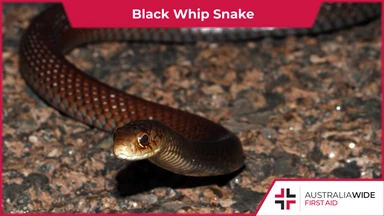
The Black whip snake is common throughout south east Queensland, including Brisbane. Large individuals are considered potentially dangerous, as their venom can cause a host of moderate to severe symptoms.
January 13, 2023
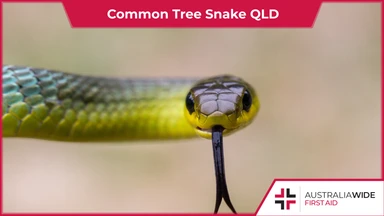
The Common tree snake is one of the most common snakes encountered in Brisbane and wider south east Queensland (QLD). They are regularly encountered in homes and suburban gardens, where they use an interesting defence to deter any potential threats.
January 12, 2023
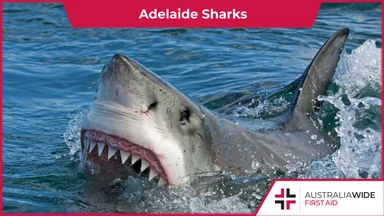
The warmer weather has caused a spike in shark sightings off the coast of Adelaide. Developing an understanding of local shark populations, and what to do if you encounter a shark, could make the difference between life and death.